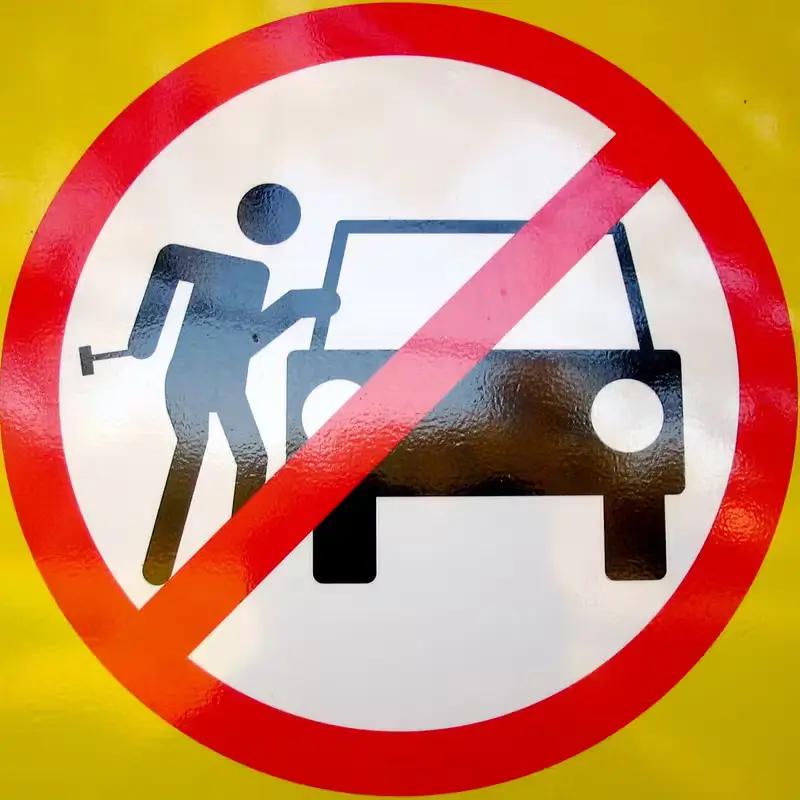
Carjacking is a crime, defined as a violent and forcible act of seizing a motor vehicle from its owner when the owner is present or when it is taken from an individual who is in control of a vehicle. It differs from grand theft auto because the vehicle is taken by way of threats, intimidation, force, or actual violence. Whereas auto theft only involves a vehicle stolen without the owner initially realizing that the vehicle is missing.
Carjacking is a felony offense both at the state and federal level. Alleged violations of the federal carjacking statute are investigated by the FBI. Carjacking became a federal crime when the Federal Anti-Car Theft Act of 1992 (FACTA) was passed. Under FACTA someone is guilty of carjacking if they took the vehicle “through force or violence or intimidation,” and the vehicle was previously transported, received, or shipped in interstate or foreign commerce, and the perpetrator intended to cause serious bodily injury or death to another person when they took the vehicle. A conviction of carjacking at the federal level may result in up to 15 years in prison and a fine of $250,000 for carjackings involving only serious bodily injury and life imprisonment if the victim of the carjacking died.
Federal prosecutors must show that the vehicle traveled in interstate or foreign commerce at some time and that the vehicle crossed the state line. There is no requirement for federal prosecutors to show that this took place at the time of the carjacking. Instead, they may rely on any point in time, such as when the vehicle was manufactured and initially transported to the state in which the vehicle was purchased and where the carjacking occurred.
Federal prosecutors must also prove that the perpetrator intended to cause seriously bodily harm or death to the person from whom they took the vehicle. Serious bodily injury is defined as an injury to a person that created an elevated risk of death, extreme physical pain, disfigurement, or the loss or the impairment of a body party, an organ, or their mental faculty.
Each state has its own statute that defines carjacking and addresses the potential sentences for those found guilty of it. For example, Florida Statute 812.133 states that carjacking involves an act of intentionally and unlawfully taking another person’s vehicle through threats, force, violence, or assault. It is considered a first-degree felony. For those found guilty, the presiding judge is required to impose a minimum prison sentence of 21 months unless there are acceptable grounds on which the judge may impose a downward departure sentence. The judge can also impose penalties up to 30 years in prison, up to 30 years of probation, up to $10,000 in fines, or a combination of those penalties. If the perpetrator used a weapon, the minimum carjacking sentence is 48 months in prison. If the perpetrator was in actual possession of a firearm during the carjacking, they will be sentenced under Florida’s 10/20/Life statute which states they would receive a minimum prison sentence of 10 years for being in possession of a firearm, a minimum of 20 years if the firearm was discharged, and a minimum of 25 years if someone was injured or killed by the firearm.
Carjacking Statistics
Recent carjacking statistics are hard to come by. The US Department of Justice’s Criminal Victimization Report for 2018 does not directly address carjacking. However, some historical Criminal Victimization Reports do report on the frequency of carjacking.
Carjacking is generally classified in official federal crime reports as a form of robbery. According to the National Crime Victimization Survey’s Carjacking report, an average of 35,000 attempted and completed carjackings occurred each year between 1987 and 1992. The report further determined the rate of carjacking as approximately 2 carjackings per 10,000 persons each year. In 52% of the carjackings, the perpetrator was successful in stealing the vehicle.
In July 2004, the Bureau of Justice Statistics released their Crime Data Brief with carjacking statistics for 1993 through 2002. During that period of time, there were approximately 38,000 carjackings each year. The report broke this number down to approximately 1.7 carjackings per 10,000 persons each year. Around 45% of the carjackings were successful.
Both official carjacking reports revealed that men are more likely to be victims of carjacking than women. Men were also more likely to perpetrate a carjacking than women. A weapon of some sort was used in three-fourths of all carjackings, with a firearm involved 46% of the time. Around two-thirds of all carjackings took place in the evening or at night and also when the vehicle was not parked at the victim’s home. Households with an annual income of less than $50,000 were more likely to be victimized by a carjacking. Carjacking rates were highest in urban areas.
In carjackings, approximately 24% of victims are injured in completed carjackings and 18% of victims are injured in attempted carjackings. Less than five percent of victims sustained a serious injury such as a gunshot wound, loss of consciousness, or other injuries that required a recovery period of at least two days in the hospital.
Armed Carjacking
Originally, the Federal Anti-Car Theft Act (FACTA) of 1992 included the use of a weapon. Although that particular element was removed when FACTA was amended in 1994, armed carjacking remains as a serious and dangerous felony at both the state and the federal level. Armed carjacking is the act of forcibly taking a vehicle with threats, intimidation, or violence with the perpetrator also possessing and likely using a weapon. Additionally, federal statute allows for the federal prosecutor to seek the death penalty in armed carjacking cases in which a death occurs.
The most common weapon used in a carjacking is a handgun. According to the Bureau of Justice Statistics Crime Data Brief, handguns were used in 59% of completed carjackings and in 17% of attempting carjackings.
As discussed earlier in this article, a carjacking can be a state or a federal felony. We highlighted Florida’s statutes related to carjacking with and without a weapon. Under Florida’s 10/20/Life statute, being in possession of a firearm during a carjacking brings a mandatory 10 year prison sentence, discharging the firearm brings a mandatory 20 year prison sentence, and if the firearm was used to injure or kill a victim during the carjacking, there is a mandatory 25 year prison sentence.
However, Florida isn’t the only state with tough armed carjacking laws. In Tennessee, armed carjacking is a class B felony. If convicted, the perpetrator may be sentenced to up to 30 years in prison. In New York, carjacking is treated as robbery in the second degree. An armed carjacking in New York is treated as robbery in the first degree which is a class B violent felony. Convicted perpetrators may be sentenced to up to 25 years in prison. In California, armed carjacking is a felony that may result in a sentence of up to nine years in prison. A perpetrator of an armed carjacking in California could also be affected by California’s three strikes law if they were previously convicted of one or more felonies. They may also be affected by California’s 10-20-life statute wherein their use of a firearm results in a mandatory 10 year sentence for the use of the gun, a mandatory 20 year sentence for firing the gun, and a mandatory sentence of 25 years to life for using the gun to seriously injure or kill the victim. Mississippi includes both dangerous and deadly weapons as well as something that appears to be a dangerous or deadly weapon, such as an air soft gun. Armed carjacking in Mississippi may result in a fine of up to $10,000 as well as a 30-year prison sentence.
How to Prevent a Carjacking
As the statistics show, carjacking is not a frequent occurrence. However, statistics also show that when it does happen, it can be very dangerous. It’s important to understand how to prevent a carjacking as well as what one should do if involved in an attempted or completed carjacking.
To prevent a carjacking:
- Take in and be alert to the surroundings. According to the Insurance Information Institute, carjacking victims may be lured by the perpetrator using a vehicle to bump into the victim’s vehicle, following the victim into their driveway, acting as a stranded motorist, or flashing their headlights at the victim in the hopes that the victim will pull over. While a cell phone should be charged and within in reach for use during an emergency, pay attention to what’s happening outside of the vehicle instead of the cell phone both to prevent carjacking and drive safely.
- When possible, don’t travel alone. If driving in a known high crime area or a rarely traveled road, don’t travel alone. Statistics show that carjackers tend to choose victims who are traveling alone.
- Park only in well-lit areas. Do not park a vehicle in an area that does not have adequate lighting. If the parking lot has a security booth, consider parking near it.
- Do not park near a wooded area. A wooded area provides a place for carjackers to hide.
- Keep the car doors locked and the windows rolled up. Vehicles should never be left unlocked or with the windows down, even if they are not unattended.
- Only choose ATMs in well-traveled areas. ATMs that are out of the way of normal foot traffic may be targeted by carjacking perpetrators.
- Do not leave valuables in plain view. Remember that carjacking is a form of robbery.
- Observe the surroundings before exiting the vehicle. This could include driving around a parking lot before choosing a place to park as well as parking and looking at what’s happening around the vehicle.
- Walk with another person. If a suspicious person or circumstance arises, walk with another person to the vehicle. This could be security or a co-worker. Do not walk alone and ensure that there is a charged cell phone ready in the event that the police need to be called right away.
- Don’t stop too close to other cars. When parking or stopping always ensure that the tires of the other vehicle are visible. Stopping or parking at this distance provides enough space for the vehicle to be maneuvered away from a potentially dangerous situation.
Should a carjacking occur:
- Give them the car. Do not fight the carjacker. Safety is paramount. If there are children in the car, inform the carjacker they can have the vehicle after the children safely exit the vehicle. Keep in mind that 74% of carjackings involve the use of a weapon.
- Do not get into the vehicle with the carjacker. Do whatever can be safely done to avoid entering or remaining in the vehicle with the carjacker.
- Alert the authorities as soon as possible. Many jurisdictions now have a 911 system that supports text messages. Text or call 911. Give the dispatcher as much information as possible so that the vehicle may be recovered, and the perpetrator apprehended.
- Stay as calm as possible. Keep a calm voice and try to make direct eye contact while explaining they can have the vehicle as soon as all of the passengers have exited. Inform the carjacker that the plan is to cooperate and give them the vehicle without a fight. Remember, the goal is to stay safe.
This information on this site is provided solely for informational purposes. It is not legal advice. Off The Record is not a law firm, does not provide legal services, and is not a lawyer referral service. The attorney listings on the site are paid attorney advertisements. Off the Record has not evaluated this content for accuracy, completeness, or changes in law. No representation is made here about your specific rights. Off The Record is not a substitute for an attorney or a law firm. Legal advice can only be provided by a licensed lawyer.
Photo credit: Greg Scales License: CC BY 2.0

 Off the Record