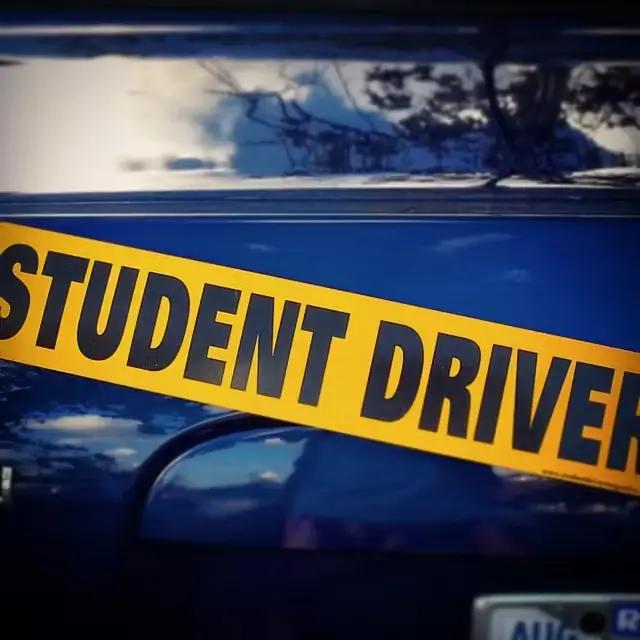
It’s not enough to be good. It’s not even enough to be perfect. You can be the most technically proficient driver in the world, the kind that can keep your car aligned perfectly with the middle of the lane, even in zero-visibility weather while driving through the mountains, and it is still not enough. Because you need situational awareness. And you need to compensate for the less-perfect drivers around you.
This is called defensive driving: the practice of driving with such skill that you anticipate and counter the forces that try to destroy you - namely bad drivers and bad weather. As an aside, this is precisely the problem with self-driving cars at the moment: it isn’t that hard to rig up an algorithm and cameras to keep a car between two lines on a road, but predictive artificial intelligence that can predict what a drunk driver or a sober pedestrian jaywalker will do is a much taller order. And while the machines still haven't figured out the art of defensive driving, humans have, and they teach the tricks in your local defensive driving course - sometimes referred to as “traffic school” or a “drivers’ safety class.”
Benefits Of Knowing Defensive Driving Skills
So you want to be a better driver? Nah, nobody really cares about that. So why do we take these courses?
The first and most important reason is money. Many insurance companies will offer a discount to policyholders who take a defensive driving course. The reason is obvious - the course teaches you how to avoid accidents and, therefore, saves the insurer money. This is especially true in no-fault insurance states like New York where the cause of the accident is irrelevant - your own policy covers your own car, which makes defensive driving discounts a money-saver for insurance companies and drivers alike. Also, as a bonus to drivers with a spotty driving record, these classes will sometimes remove points from your record, which in turn also reduces your insurance rates.
Another reason starts with the courts. Many moving violations will result in points on your license, which, as we just mentioned, are wiped clean by optional driving classes. But the most serious offenses, such as driving under the influence, will often require a course just to keep your license. And for drivers who consistently rack up tickets, you may also be required to take a safe driving course. Again using New York as an example: for drivers with eleven or more points in an eighteen-month period, your license will be suspended. However, if you take a driver safety course, four points will be eliminated, leaving your license intact.
Lastly, there is the safety factor. Defensive driving courses will teach you what the autonomous driving vehicle robots have not figured out: how to avoid a crash when the other drivers or driving conditions endanger your safe driving. You learn to predict the unpredictable, in a way. By adopting safe driving techniques, and refreshing your knowledge of local driving laws, you’ll put yourself in a better position to come home safe at the end of the day.
Job Positions That Require A Defensive Driving Course
You might think that most jobs that require driving in turn require a safe driving course. Sadly, this is not the case, though the Occupational Safety and Health Administration (OSHA) recommends it. According to OSHA’s figures, the average crash costs an employer $16,500. If the on-the-job crash results in an injury, the average cost jumps to $74,000. And if anyone dies? The average cost is $500,000 These figures appear to be from 2003, so they are likely understating the costs today.
Given those costs, you’d think that more employers would require defensive driving courses. What happens when they do? Nationwide Insurance saw a decrease in preventable crashes of 53 percent, despite the mileage of their drivers rising 19 percent in the same time period. Charter Communications saw a 30 percent drop - still very impressive.
So, which employers have caught on and started requiring these courses? You’ll see a lot of company and government fleet services - such as Colorado University - require defensive driving courses. And, as you might expect, some taxi companies do too. Uber, for example, at least requires it in New York City (though their requirement may just be an extension of the citywide Taxi and Livery Commission (TLC)’s mandate that all TLC license applicants first complete a defensive driving course). TLC licensure (and its requirement for a defensive driving class) extends to drivers of commuter van pools and drivers of accessibility transportation for the disabled.
Defensive Driving Courses & Schools
Like many industries, defensive driving courses have made the jump to the World Wide Web. Yes, this information superhighway is really going to change things - you just wait!
Seriously though: in most states, you can find defensive driving (or “traffic school”) classes online. In others, the required classroom hours will be in-person. Some offer both - giving you your choice of online or in-person boredom. (We kid. Defensive driving courses, while not the most titillating topic, save lives and reduce insurance rates.) Depending on your state, the course could be as short as a couple hours or you may be required to burn a whole Saturday with an eight-hour course. Washington state, for example, has three kinds of driver courses:
- A 4-Hour Level 1 Defensive Driving Course: this is a class for first-time offenders who want to remove a blemish from their record.
- An 8-Hour Level 2 Defensive Driving Course: for more serious offenses, the court may require a driver to take a full eight-hour class. IDriveSafely’s longer course includes defensive driving tips and substantive state law to help you avoid any further run-ins with the law.
- A Voluntary Insurance Discount Course: for those just looking to trim their exorbitant car insurance bill, many providers have a voluntary course you can take to refresh yourself on the law and safe driving techniques. IDriveSafely’s Washington voluntary course is eight hours - the same length as the serious offenders’ course, but at least with this one, you’ll be walking out with an insurance discount and no criminal record.
If you’re wondering where to start when looking for a course, your state DMV’s website probably has a list of approved providers. Some examples of states that make it easy to find a course include:
- New York maintains a small list of online and in-person approved providers.
- California has a mammoth 2901 approved online providers on their list as well as a presumably smaller list of in-person and home study classes.
- Nebraska has a small list of course providers, which all include the required eight hours of classroom instruction.
For most of the states we checked, the lists weren’t too long and you can quickly Google a few to see which have good reviews and affordable rates. If you’re a Californian … good luck sorting through the thousands of approved providers with names like WWW 6 BUCK OFF 9 COM. Yeah, that’s a real name, and while we can’t speak to the quality of its instruction, we’d guess it isn’t as good as a comedy traffic school.
What? Comedy traffic schools? Yep, those are a thing, especially in California, where they have been a burgeoning industry for decades. A recent article in Vulture dove into the weird world of comedic traffic schools in California, including an online course hosted by Eric Estrada (famous for a show called CHiPS in the 1970s) that apparently wasn’t that funny and an in-person class that served as an income stream for a washed-up never-was comedian. Sadly, the days of classes hosted by mainstream comedians like Adam Carolla at landmark institutions like the Hollywood Improv or the Ice House have passed.
Defensive Driving Certificates In The USA
What do you get for graduating a defensive driving course? Well, in addition to reduced insurance rates, a stay of suspension on your license if you were at the point limit, and perhaps your life itself, you’ll typically get a certificate of completion. Some courses and states are advanced enough to transmit your certificate directly to the DMV. If not, you’ll want to print the certificate and forward it to the DMV and your insurance company.
Should You Take a Defensive Driving Class?
Absolutely. Look, we know what you are thinking: that’s a few hours of my life that I’ll never get back. And there are way more fun things to do than sit through a rehashing of your driver’s ed class from fifteen years ago. But these courses teach more than a few road rules - they teach you techniques to avoid accidents that can save your life and those of your passengers.
Plus, if you, like everyone, like saving money, you’ll probably get an insurance rate discount for completing the class. Considering that many states allow these courses to be delivered online, those few hours and course fees will pay off with reduced insurance rates.
And if you don’t have a choice - you’ve committed a serious traffic offense or a series of traffic offenses, for example - well, we don’t know what you’re waiting for. Take heart: it’s only a few hours (or a day) of your life, and at least some of the classes are fun and entertaining. Push through and you'll save your license.
This information on this site is provided solely for informational purposes. It is not legal advice. Off The Record is not a law firm, does not provide legal services, and is not a lawyer referral service. The attorney listings on the site are paid attorney advertisements. Off the Record has not evaluated this content for accuracy, completeness, or changes in law. No representation is made here about your specific rights. Off The Record is not a substitute for an attorney or a law firm. Legal advice can only be provided by a licensed lawyer.
Image credit: burnbless CC BY 2.0

 Off the Record