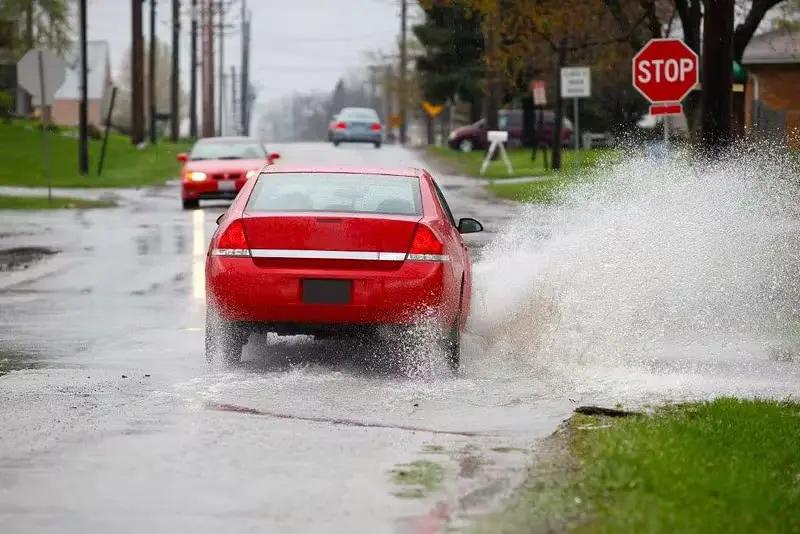
Traction is the most underrated aspect of driving. Everyone throws out horsepower numbers, or if they’re really gear-heads, they might talk torque. But all the power in the world means nothing if your wheels spin out. Traction makes that power usable - and the most unpredictable way to lose traction is through hydroplaning.
Hydroplaning is the loss of traction caused by water on the road surface. Typically, it happens when a car encounters a deep puddle at a high rate of speed. Instead of the tires sticking to the road, they lose traction and the car floats above the surface. Lost traction doesn’t just mean some lost power - it can result in loss of control of the vehicle, a spin-out, inability to brake, or worse, an accident.
When Does Hydroplaning Occur
Simple answer: when you go fast and try driving over a big, deep puddle, you may lose traction and “float” on the water. This is hydroplaning, and it is both unnerving and dangerous, as you have just surrendered control over your vehicle to the gods of physics: momentum, mostly.
Hydroplaning occurs most often when it first rains after a long, dry spell. Oils and dirt block the road’s surface, like pores on a pimply teenager. Instead of water seeping through the asphalt, it pools on top, and the combination of a puddle and oily surface create a traction nightmare. Add a car going quickly over that slick surface and you have the recipe for hydroplaning. It is important to remember that, with wet weather, the posted “safe” speed limit is no longer safe. Slow down.
“But, my super all-season, winter, studded tires have tread!,” you protest. Sure. But tread only does so much. While tire tread is designed to allow water and snow to be channeled through the tire and out the sidewalls, preserving precious traction, not all tires and driving environments are created equal. Deep puddles, black ice, or layers of dirt and oil on the road present bigger challenges than most tires are designed for. Plus, many folks - especially those new to driving in bad weather - aren’t as wise as you and don’t consider their choice of tire: some are meant for summer, some for snow, and some are bald “slicks” meant for the racetrack or junkyard.
The less tread you have, and the more water, oil, and grime the road has, the more likely you are to lose traction and hydroplane in a rainstorm or flood.
What To Do When Hydroplaning
It happens to us all. We’re driving on a freeway at 65 miles per hour and, after going around a turn, we encounter a Very. Big. Puddle. Do we stop? Probably not, if the road isn’t abandoned - we’ll get rear-ended. Do we swerve into the next lane, where it is slightly more dry? Also a nope - we’ll get side-swiped. That leaves us with one choice: we plow through the puddle.
What happens next can be terrifying: you tires lose contact with the road and your car has the sensation of floating. Your ability to control where the car is headed is almost nil - it’s almost as if some UFO has locked a tractor beam on you and carried you off towards space. When you lose traction through hydroplaning, the best thing to do is to keep calm and carry on straight ahead. Coast to the other side of the puddle, and if your engine was flooded and cut out, carry that momentum to the shoulder, if you can. (Don’t restart your engine, or you may damage it beyond repair. Just call for a tow.) When you arrive on the other side, straighten up gradually and resume traveling, this time at a slower speed in the middle lane.
What should you not do? Don’t brake, accelerate, or turn sharply. If you try braking, you may lock up your wheels, and if one wheel suddenly gets traction while the others are still floating, you’ll end up spinning. If you must brake, know whether your car has Anti-lock brakes (ABS) or not. If so, brake normally and your car will automatically pump the brakes to prevent wheel lock. If not, pump the brakes on and off so that you do not lock your wheels - wheel look means, you guessed it, skidding and spinning.
Here are more things to avoid: acceleration and making sharp turns. If you try gassing it to go faster, you’ll probably spin your wheels and the same thing could happen as when you brake: you spin like a top. If you try turning sharply, you’ll probably spin out as well. Your best bet is to let your momentum carry you forward and aim the car straight ahead, correcting slightly when you feel your tires catch.
How To Avoid Hydroplaning
An ounce of prevention is worth a pound of panicked reaction, right? Make sure your tires are appropriate for the season: summer tires, winter tires, etc. All-season tires might be appropriate for areas with mild climates, like the San Francisco Bay Area or Seattle, but if you regularly get feet of snow, like Minnesota, look into winter tires and/or chains. Tire pressure is largely overlooked, but is an important part of prevention: an underinflated or overinflated tire will make less contact with the road and have poorer traction that a properly inflated tire will.
Second, when driving in a rainstorm, follow the tracks of the car in front of you on the road. Their tire tread has already pushed away a lot of oil and water and your best bet for traction is to stick to that path. Also, look at the road lanes: middle lanes tend to be drier, as roads are bowed to get rain to drain to the sides, so those lanes will naturally have more traction.
Last, and most basic: slow down. You’re a lot less likely to hydroplane or have accidents generally when you travel at reasonably slower speeds when it is raining. And given that we’re a speeding ticket website, we’d be remiss not to remind you of the basic speed limit law that many states have implemented: never travel faster than is safe for current conditions, regardless of the speed limit. Doing so can land you a ticket.
Partial Hydroplaning
Partial hydroplaning is a scary way of saying that, when the road is wet, you’ll lose some traction. Your response to partial hydroplaning is common sense: slow the heck down. If you don’t, you may end up fully hydroplaning and losing all traction - which is way more scary and dangerous. Quickly braking with poor traction (a.k.a while partially hydroplaning) is a bad idea and probably won’t work out well: your stopping distance already increases in the rain, and if you have reduced traction due to hydroplaning, you’ll take even longer to stop.
According to DriveSafeOnline.org, partial hydroplaning happens roughly between 35 and 55 miles per hour. That definitely has to be a rough figure, as hydroplaning is possible at nearly any speed, depending on road conditions and water depth, though the faster you go, the more likely you are to hydroplane.
Hydroplaning Accidents
Any time you lose control over your car (except when you hand it over to autonomous driving software - that never fails), your risk of crashing goes way up. Hydroplaning takes away your ability to control your car and leaves you helpless - waiting seconds, that feel like days - for that sweet, sweet traction and control to kick in.
If you’ve been in a hydroplaning accident, you’re probably wondering who is at fault. The simple answer is whomever your attorney blames! In fact, Lawyers.com has a few ideas about defective tires or roadways with poor drainage to give you an idea of how a lawyer might pin the accident on someone else. But in reality, it is probably you. We know - that sucks - but if you maintain your vehicle, have proper tires, and slow down when it rains, your odds of hydroplaning and crashing decrease substantially.
This information on this site is provided solely for informational purposes. It is not legal advice. Off The Record is not a law firm, does not provide legal services, and is not a lawyer referral service. The attorney listings on the site are paid attorney advertisements. Off the Record has not evaluated this content for accuracy, completeness, or changes in law. No representation is made here about your specific rights. Off The Record is not a substitute for an attorney or a law firm. Legal advice can only be provided by a licensed lawyer.
Image credit: State Farm; CC BY 2.0

 Off the Record