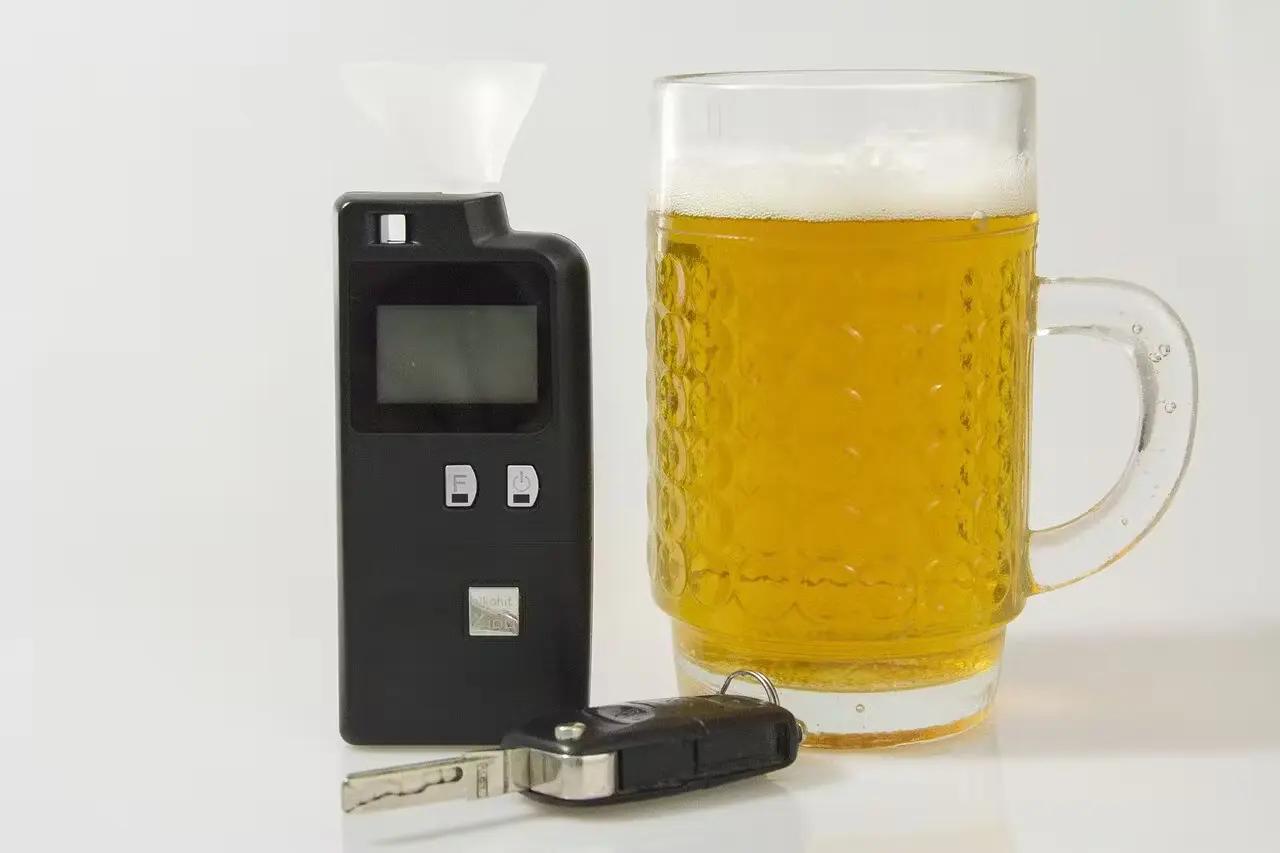
You’ve heard it before: implied consent means that if you are requested to by an officer, you must consent to a blood or breath test to determine whether you are under the influence of alcohol while driving. They tell it to you in driver’s ed, on the driver’s test, and it is the law in every single state in this country.
But what is the truth behind these breathalyzer tests? Are they accurate? Can they be beaten? Or worse, can they result in a false positive? Should you choose a breathalyzer or blood test? What happens if you simply refuse — will you get away with driving under the influence?
Before we dive into those questions, a quick note: this is a discussion of alcohol breath and blood tests. While researchers have recently made the news by devising a marijuana breath test, that device has not yet been peer-reviewed and deployed into the field for law enforcement. Currently, only alcohol is tested via breath — blood tests and the officer’s observations are used when individuals are suspected of driving under the influence of drugs.
What is a breathalyzer or alcohol breath test?
There are a couple of common tests used by police departments to measure the blood alcohol content of drivers: the blood test and the breath test. The breath test, commercially known as a breathalyzer, is the less invasive of the two options, as it does not require drawing blood. It also carries the added benefit of being nearly instantaneous — no waiting weeks for lab results to come back.
There are really two kinds of breathalyzers though, and it is important to know the difference. Many officers carry a preliminary alcohol screening (PAS) device, a pocket breathalyzer that can be administered in the field. If you have ever seen someone break out a gadget breathalyzer at a party or bar, that is basically what these are — not quite accurate, but cheap and easy to administer.
The second kind of breathalyzer, the more accurate one, is a large machine that is typically found in the police department. Depending on your local laws, you may be brought into the station and told to wait for a short period of time before the breathalyzer is administered — an officer will monitor you to make sure you don’t vomit, which can falsely increase the reading on the machine. They may also be required to take multiple readings, 10 or 15 minutes apart, to ensure accuracy.
Is a breathalyzer accurate?
Between the two kinds of breathalyzers, the accuracy is no competition at all — the preliminary pocket test is not nearly as accurate, and it probably would not be admissible in court in most jurisdictions. The large machine, while more accurate than the pocket machine, isn’t without fault though — all scientific tests have a margin of error, breath alcohol tests must be calibrated regularly, and a recent news report from ZDNet recapped how the source code behind a particularly common breath test, used in Washington state, New Jersey, and elsewhere, may have been defective and inflating readings, though the study that alleged such errors was withdrawn before finalization after the researchers were sued by the device manufacturer.
Without knowing the exact test that you undertook, and the circumstances of the test (such as the presence of vomit), it is impossible to quote a figure for the margin of error — a breath test probably won’t falsely put you over the limit if you were stone cold sober, but if you are bordering on the limit, a “barely drunk” rating of just over the legal limit may fall within a margin of error and be a possible defense to DUI charges.
How is blood alcohol level measured?
When a person is given a blood or breath test, the result is typically a very tiny number — the blood alcohol content (BAC) number. Some common BAC levels, courtesy of Stanford, include:
- 0.00: no measurable alcohol, this person is sober
- 0.08: the legal limit in most states, most people are mildly impaired
- 0.162 to 0.20: nausea may begin, this person is a sloppy drunk
- 0.4 and up: onset of coma, death is likely.
Blood vs breathalyzer? Which should you pick?
Let’s say that you were out on the town and you had a couple of drinks. You aren’t sure if you are under the legal limit, but the cop who pulled you over certainly suspects that you are. She gives you a choice: blood or breath? Which do you pick?
Drivers make this decision every day in states that give them a choice, and it is not an easy one. To choose wisely, you’ll have to balance a ton of factors: accuracy, timing of the test, timing of your drinking, and plausible DUI defenses, all while mildly intoxicated, standing on the roadside, terrified of the cop standing in front of you.
The biggest factor though is timing: your blood alcohol level after drinking will rise for a period of time while your body passes the alcohol you just ingested into your blood. At the same time, your body slowly eliminates alcohol from your blood — the average rate is about one serving of alcohol eliminated from your blood per hour. In short, your blood alcohol level is a curve that will peak a short while after drinking then slowly taper down until your blood is alcohol free.
All of that will probably make more sense with a couple of examples.
Example 1: this person has just crushed five beers in the last hour but is not feeling the effects yet. With that amount of alcohol, they will probably soon be at or over the legal limit, once his body digests the beer in his stomach. If he takes a breath test now, he might get a borderline reading, or he might even be under the legal limit. It is a close call. If he chooses the breath test, it will be sometime before he is taken to a facility that can draw his blood, which will give his body more time to digest the beer and float the alcohol into his bloodstream. This is the rising blood alcohol theory — his level is on the rise currently so the sooner he is tested, the lower the results will be.
Example 2: this young lady sipped four glasses of wine over the course of a long evening, and while she felt the effects in the immediate aftermath of the drinking, including a rosy glow on her cheeks, some time has passed since her last drink before she drove and was pulled over. If she chooses the breath test, she may be close to the legal limit. If she chooses the blood test, the extra time it takes to transport her to a facility that can draw her blood may give her body more time to digest the alcohol and eliminate it from her bloodstream. This is the falling blood alcohol theory.
The one other wildcard to keep in mind is the accuracy of a blood test: blood tests are more accurate than breathalyzer tests, though they do have small margins of errors as well. Generally, it is harder to attack a blood test result in court than a breath test.
How do you pass a breathalyzer test?
The only surefire way to pass a breathalyzer test is to not drink enough to fail — 0.08 is the limit for blood alcohol content in most states. You can convert that number to an estimated number of drinks per hour using a handy chart.
Besides not drinking, you can pass a breathalyzer test by buying time. The easiest way is to wait to drive after drinking — most people eliminate the equivalent of one drink from their blood per hour that they wait. If you have done the math, and you suspect that you are at the legal limit or close to it, there won’t be too many opportunities to buy time once you have been pulled over. While roadside field sobriety tests take time, they also are easy to fail, even while sober, and only exist to provide more evidence to be used against you in court.
There are many myths about beating breath tests through trickery. Putting pennies in your mouth before you blow will not work. Drinking coffee may make you feel more sober, but it will not affect your blood alcohol level. None of the tricks work – waiting is pretty much the only answer.
Can you beat a breathalyzer test in court?
Finally, can you beat a breath test in court? Absolutely, in some cases. Though the sheer number of possible defenses would be too exhaustive to recap here, let’s take a look at a few bullet points:
- The rising blood alcohol argument. The defense argues that at the time of driving, the defendant had a lower blood alcohol content than the legal limit. But as time passed during the roadside examination and transport to an accurate blood or breath testing facility, the defendant's body passed more alcohol from the stomach to the bloodstream. This is a common argument, but it only works if your test was just over the legal limit.
- The mouth vomit argument. If you vomit immediately before taking a breath test, the extra alcohol from your stomach that is now in your mouth will cause a falsely high reading. This is why most police stations will have someone keeping an eye on you before they administer the test — it keeps you from later claiming that you vomited in your mouth.
- The ketones defense. A personal favorite, this defense sounds like a 1950s band, but it is a favorite of diabetics and low-carb dieters alike. When a person first starts a low-carb diet, they can shock their body into something called ketosis, where ketones are floating through their bloodstream. Diabetics also may have an excess of free-floating ketones. The ketones can cause a falsely high breath test reading, though again, you’d have to be really close to the legal limit for this to work.
What happens if you refuse a breathalyzer test?
Most states have passed what are called “implied consent” laws. This means, that by accepting the privilege of driving, you have already consented to taking a blood alcohol test whenever requested by an officer. Can you then say no?
Technically, yes. The penalty for saying no will vary by state, but in most states, it will mean that you lose your driver’s license for a very long time — months or even years. In addition, it may not get you out of the DUI charge itself. Many drivers, thinking that the test is mandatory for a conviction, will refuse only to find out that prosecutors can use other evidence, such as your lack of fine motor skills, slurred speech, smells of alcohol on your breath, the refusal to take the test (as evidence of consciousness of guilt), and failed field sobriety tests as evidence of impairment.
While it will be harder to convict you without a blood or breath test, it will not be impossible. Heck, you might even get an extremely motivated officer who calls up the prosecutor in the middle of the night and gets a warrant to draw your blood without your consent — they will literally tie you down and pull your blood out to do the test. If that happens, you not only get the penalty for refusing the blood or breath test, but you also get a conviction for driving under the influence.
Image credit: Public domain

 Off the Record